Joint Theory Seminar
Speaker: Csaba Csaki
Title: Higgslike dilatons
Host: John Terning
Room: 432
Abstract:
User:
High-Energy Seminars
Time:
8:00am
Description:
Colloquium
Speaker: Csaba Csaki
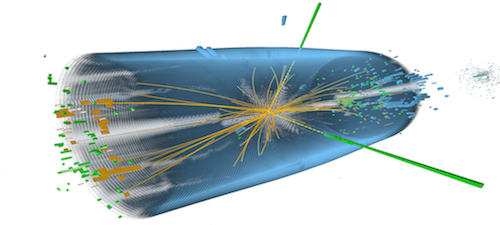
Title: Particle Physics after the Discovery of the Higgs Boson
Host: John Terning
Room: 432
Abstract:
User:
High-Energy Seminars
Time:
8:00am - 9:00am
Send Reminder:
Yes - 1 day 8 hour 0 minutes before start
Description:
HE Seminar
Speaker: Andrew Waldron
Title: Massive Gravity
Host: Kaloper
Room: 416
Abstract:
User:
High-Energy Seminars
Time:
5:30am - 6:30am
Send Reminder:
Yes - 0 days 4 hour 0 minutes before start
Description:
Joint Theory Seminar
Speaker: Igor Khavkine
Title: Time delay in classical and quantum gravity
Host: Steve Carlip
Room: 432
Abstract: A class of diffeomorphism invariant, physical observables, so-called astrometric observables, is introduced. A particularly simple example, the time delay, which expresses the difference between two initially synchronized proper time clocks in relative inertial motion, is analyzed in detail. It is found to satisfy some interesting inequalities related to the causal structure of classical Lorentzian spacetimes. Thus it can serve as a probe of causal structure and in particular of violations of causality. A quantum model of this observable as well as the calculation of its variance due to vacuum fluctuations in quantum linearized gravity are sketched. The question of whether the causal inequalities are still satisfied by quantized gravity, which is pertinent to the nature of causality in quantum gravity, is raised, but it is shown that perturbative calculations cannot provide a definite answer. Some potential applications of astrometric observables in quantum gravity are discussed. [arXiv:1111.7127]
User:
High-Energy Seminars
Time:
9:00am - 10:00am
Send Reminder:
Yes - 1 day 8 hour 0 minutes before start
Description:
HE Seminar
Speaker:
Title:
Host:
Room: 285
Abstract:
User:
High-Energy Seminars
Time:
8:00am - 9:00am
Send Reminder:
Yes - 1 day 8 hour 0 minutes before start
Description:
HE Seminar
Speaker: Igor Ostrovskiy, Stanford
Title: Recent Results from EXO
Host: Svoboda
Room: 285
Abstract: The EXO (Enriched Xenon Observatory) experiment is searching for neutrinoless double beta decay of Xe-136. If discovered, such a process would constitute a violation of lepton number conservation and would prove that neutrinos are Majorana particles. Moreover, the rate of this process depends on the
effective Majorana mass, thus providing information on the absolute mass scale of neutrinos, as opposite to the neutrino oscillation experiments that only measure mass differences. The current iteration of the experiment, called EXO-200, uses a time projection chamber filled with ~100 kg of liquid xenon enriched in Xe-136 isotope. The detector was designed and constructed to provide extremely low levels of background radioactivity, and is operated half a mile underground at the WIPP facility close to Carlsbad, New Mexico.
In August 2011, the EXO collaboration was the first to successfully measure the two-neutrino mode of the double beta decay of Xe-136, and in May 2012 placed a limit on the neutrinoless mode (T1/2 >1.6e25 years @90C.L.)
In this talk I will describe the EXO-200 design, present its latest physics results, and give an outlook for the next generation of the experiment.
User:
High-Energy Seminars
Time:
5:30am - 6:30am
Send Reminder:
Yes - 2 days 4 hour 0 minutes before start
Description:
Special Joint Theory Seminar
Speaker: Itay Yavin (Perimeter Institute)
Title: Recent developments in the search for Dark Matter
Host: Hsin-Chia Cheng
Room: 432
Abstract:
User:
High-Energy Seminars
Time:
5:30am - 6:30am
Send Reminder:
Yes - 0 days 4 hour 0 minutes before start
Description:
Joint Theory Seminar
Speaker: Don Page
Title: Time Dependence of Hawking Radiation Entropy
Host: Albrecht
Room: 285
Abstract: If a black hole starts in a pure quantum state and evaporates completely by a unitary process, the von Neumann entropy of the Hawking radiation initially increases and then decreases back to zero when the black hole has disappeared. Here numerical results are given for an approximation to the time dependence of the radiation entropy under an assumption of fast scrambling, for large nonrotating black holes that emit essentially only photons and gravitons. The maximum of the von Neumann entropy then occurs after about 53.81% of the evaporation time, when the black hole has lost about 40.25% of its original Bekenstein-Hawking (BH) entropy (an upper bound for its von Neumann entropy) and then has a BH entropy that equals the entropy in the radiation, which is about 59.75% of the original BH entropy 4 pi M_0^2, or about 7.509 M_0^2 approx 6.268\times 10^{76}(M_0/M_odot)^2, using my 1976 calculations that the photon and graviton emission process into empty space gives about 1.4847 times the BH entropy loss of the black hole.
User:
High-Energy Seminars
Time:
9:00am - 10:00am
Send Reminder:
Yes - 1 day 8 hour 0 minutes before start
Description:
HE Seminar
Speaker:
Title:
Host:
Room: 285
Abstract:


 5:30am» Joint Theory Seminar: Csaba Csaki